In This Guide
How to Tell If Clothing Is Vintage
Knowing how to tell if clothing is vintage can be surprisingly tricky.
Some garments are obviously old. Others look modern even though they were made decades ago. Then there are newer pieces designed to look vintage, which can make things even more confusing.
At Already Made, we source clothing one piece at a time, and dating garments often involves looking at several clues rather than relying on one detail.
There is rarely a single feature that proves a piece is vintage.
Instead, the best approach is to look at the garment as a whole.
What Counts as Vintage Clothing?
There is no single legal definition of vintage clothing, but a commonly used rule of thumb is that a garment around 20 years old or more may be considered vintage.
That means clothing from the early 2000s can now fall into the vintage category, alongside older pieces from the 1990s, 1980s and earlier.
Age alone, however, does not tell you everything.
A genuine vintage garment should usually have been made during the period it represents, rather than being a modern reproduction inspired by that era.
That is where the details matter.
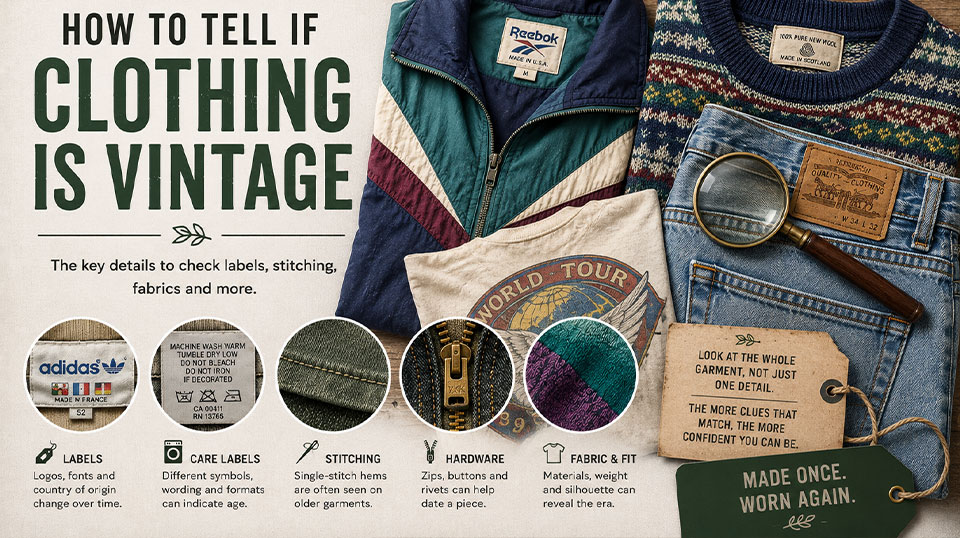
1. Check the Clothing Label
The label is often one of the best places to start.
Brand labels change over time.
Logos are updated, typefaces change, label materials evolve and manufacturing information can shift from one country to another.
If you are trying to date a piece from a known brand, compare the label with examples from different periods.
Look at:
-
Logo style
-
Font
-
Label shape
-
Colours
-
Country of manufacture
-
Size format
-
Fabric information
-
Care instructions
An older version of a familiar logo can be a strong clue that the garment comes from an earlier period.
But labels should never be viewed in isolation.
Tags can occasionally be replaced, copied or reused, so the rest of the garment should support what the label suggests.
2. Look at Where the Garment Was Made
The country of manufacture can provide useful context.
Many brands have changed their manufacturing locations over the years as production moved between countries.
For example, an older version of a garment may have been made in the UK, USA or Western Europe, while later versions of the same product were manufactured elsewhere.
This does not automatically make one version better than another, but it can help narrow down the likely era.
Country-of-origin information is most useful when combined with label style, construction and other details.
3. Examine the Care Label
Care labels can reveal a surprising amount.
Older garments may use different washing symbols, wording or fibre descriptions from newer clothing.
Some very old pieces may have little or no care information at all.
You might also see:
-
Older-style wash instructions
-
Different fibre terminology
-
Unusual symbol layouts
-
Separate care and brand labels
-
Labels printed rather than woven
-
Older manufacturing codes
The introduction of specific care-label standards varied by country and era, so these details can help support an approximate date.
4. Check the Fabric Composition
Fabric can tell you a lot about when a garment may have been made.
Certain materials and blends became more or less common during different decades.
You might see older garments made from heavier cotton, wool blends or synthetic fabrics that feel noticeably different from modern equivalents.
Fabric weight can also be a clue.
A vintage sweatshirt, for example, may have a thicker or denser feel than many modern versions.
That does not mean every heavy garment is vintage, but it can form part of the overall picture.
5. Look at the Stitching
Construction methods can also help.
One commonly discussed example is the difference between single-stitch and double-stitch hems on older T-shirts.
Some older T-shirts, particularly from previous decades, may feature single-stitch construction at the sleeves or hem.
Newer clothing is more likely to use double stitching, although this is not a universal rule.
Other things to examine include:
-
Seam construction
-
Overlocking
-
Reinforcement
-
Stitch density
-
Hem style
-
Collar construction
Again, no single stitching detail should be treated as proof.
Use it alongside the other clues.
6. Inspect Zips, Buttons and Hardware
Hardware can be another useful dating tool.
Older jackets, jeans and workwear may feature zips or fasteners from manufacturers that were more common during particular periods.
You may also notice differences in:
-
Zip shape
-
Pull-tab design
-
Button material
-
Metal finishes
-
Rivets
-
Snap fasteners
Some vintage enthusiasts become very familiar with particular zip manufacturers and their changing designs.
You do not need to become an expert overnight, but unusual hardware is worth investigating.
7. Look at the Fit and Shape
Fashion silhouettes change.
A garment’s overall shape can therefore provide clues about its age.
For example, older sweatshirts may have:
-
Wider bodies
-
Shorter lengths
-
Dropped shoulders
-
Larger sleeves
-
Different ribbing
Vintage jeans may have rises and leg shapes that differ from current trends.
Jackets may be boxier or shorter.
Even when two garments are labelled the same size, their proportions can be completely different.
This is one reason vintage sizing can be unreliable compared with modern sizing.
8. Compare the Label Size With the Actual Measurements
A vintage size Large may fit more like a modern Medium.
Or the opposite.
Sizing standards have changed over time, and different brands have always sized clothing differently.
That means the label size itself can sometimes provide context, but the actual garment measurements are far more useful for fit.
When buying vintage clothing online, check measurements such as:
-
Pit to pit
-
Length
-
Sleeve
-
Shoulder width
-
Waist
-
Rise
-
Inside leg
At Already Made, we recommend using measurements rather than relying only on the original size label.
9. Look at the Graphic Style and Print Method
Graphic T-shirts and sweatshirts can often be dated by their artwork.
Older prints may use:
-
Different ink textures
-
Cracked or naturally faded graphics
-
Specific logo treatments
-
Older sports branding
-
Tour dates
-
Event information
-
Advertising designs
A print may also include a copyright date.
That can be helpful, but be careful.
A copyright date does not always equal the manufacturing date of the garment.
A modern reproduction can legally use artwork created decades ago.
Use the date as one clue, not the final answer.
10. Look for Signs of Natural Age
Genuine vintage clothing often shows subtle signs of age.
These can include:
-
Softened fabric
-
Natural fading
-
Light wear around seams
-
Patina on metal hardware
-
Slight cracking on prints
-
Worn labels
-
Small repairs
These details can help support the idea that a garment has been around for some time.
But wear should not be confused with age.
A heavily worn garment can still be relatively new.
Likewise, a carefully stored vintage piece may look almost untouched.
11. Check for Old Brand Names or Logos
Brands evolve.
Some change logos.
Some merge.
Some disappear completely.
If a garment features an old company name, retired logo or discontinued sub-brand, that can be a useful clue.
You may also find clothing from companies that no longer exist.
That can make research particularly interesting because old catalogues, advertisements and archived images may help date the item more accurately.
12. Be Careful With Modern Reproductions
Vintage-inspired fashion is extremely popular.
Many brands deliberately recreate older designs, faded graphics, washed fabrics and retro silhouettes.
That means something can look vintage without actually being vintage.
Look for clues that suggest modern manufacture, such as:
-
Recent website addresses
-
Modern QR codes
-
Contemporary care labels
-
Recent trademark information
-
Current-season product codes
-
Modern fabric blends
-
Newer country-of-origin labels
Retro style and vintage clothing are not the same thing.
A retro garment can look like it came from 1985 while having been made last year.
13. Research the Brand
If you are unsure, research is often the best next step.
Search for:
-
Old brand catalogues
-
Archived adverts
-
Vintage label guides
-
Brand history
-
Collector forums
-
Similar sold items
-
Old product photographs
Try to find examples that match several details rather than relying on one image.
If the label, construction, design and fit all point towards the same period, your estimate becomes more reliable.
Can You Date Vintage Clothing Exactly?
Sometimes.
But not always.
Certain garments include obvious dates, production codes or event information that make them easier to identify.
Others may only allow an approximate estimate such as:
Late 1980s
Early 1990s
1990s
Late 1990s to early 2000s
There is nothing wrong with being approximate.
In fact, it is better to be honest about uncertainty than to invent an exact date.
At Already Made, we prefer to use phrases such as estimated era when the evidence is not conclusive.
Does Vintage Clothing Have to Look Old?
No.
Some vintage garments were barely worn.
Others may have been stored carefully for decades.
A piece can be genuinely vintage and still look extremely clean.
Likewise, newer garments can be distressed, washed or faded to make them look old.
Appearance alone is not enough.
The strongest assessment comes from combining age-related clues.
A Simple Vintage Clothing Checklist
When trying to work out whether a garment is vintage, check:
-
Brand label
-
Care label
-
Country of manufacture
-
Fabric composition
-
Stitching
-
Hardware
-
Cut and fit
-
Graphic style
-
Copyright information
-
Signs of natural age
-
Brand history
The more of these details point towards the same era, the more confident you can be.
Why Accurate Dating Matters
Knowing roughly when a garment was made can help you understand what you are buying.
It can explain:
-
Why the fit is different
-
Why the fabric feels unusual
-
Why the label looks unfamiliar
-
Why a logo is different
-
Why a design is collectible
-
Why the garment may be harder to replace
It also helps sellers describe clothing more accurately.
For us, that matters.
Vintage clothing should be sold with as much transparency as possible.
How Already Made Identifies Vintage Clothing
At Already Made, we look at the garment as a whole.
That may include the label, construction, fabric, fit, hardware, branding and visible signs of age.
When we can identify a likely era, we include that information in the listing.
When we cannot be completely certain, we say so.
We would rather describe a piece as estimated 1990s than pretend to know an exact year without enough evidence.
Every garment has its own clues.
And that process of discovery is part of what makes vintage clothing interesting.
Made Once. Worn Again.
So, how can you tell if clothing is vintage?
There is rarely one magic clue.
The best way is to look at the label, construction, fabric, fit, hardware and history together.
Over time, you begin to recognise the small details that separate genuine vintage clothing from modern reproductions.
And that is part of the appeal.
Vintage clothing is not just old clothing.
It is clothing from another moment in time that has survived long enough to be worn again.
WEAR ALREADY MADE.
Made once. Worn again.